
NewsSTAND · Local & National News · April 25, 2025
The Truth About xAI in Memphis: Jobs, Pollution, and the Real Cost to the Community
Are profits and a handful of jobs worth risking the health and future of an entire community?


Written by: JR Robinson
The arrival of Elon Musk’s xAI supercomputer facility in South Memphis has sparked a fierce debate: Is this a game-changing economic opportunity, or does it come at too high a cost to public health and community trust? As the city stands at a crossroads, both supporters and critics are making their voices heard. Here’s a comprehensive, fact-based look at what xAI means for Memphis, the health risks, the jobs, and the deeper question: Who really benefits?
What Is xAI Doing in Memphis?
xAI, founded by Elon Musk, is building one of the world’s largest AI data centers in South Memphis to power its Grok chatbot and other artificial intelligence projects. To meet its enormous energy demands—up to 422 megawatts, rivaling a full-scale power plant—xAI has installed at least 35 methane gas turbines on-site, many of which are operating without the required permits[1][3][6].
Environmental and Health Impacts
Air Pollution and Health Risks
- Emissions: The gas turbines emit nitrogen oxides (NOx), formaldehyde (a known carcinogen), and particulate matter. These pollutants are linked to increased rates of asthma, respiratory illnesses, heart attacks, and cancer[1][2][4].
- Ozone and Smog: Memphis already struggles with smog and regularly exceeds federal ozone standards. xAI’s turbines are now likely the city’s largest industrial source of smog-forming NOx, worsening air quality and increasing health risks, especially for children and those with preexisting conditions[1][6].
- Community Impact: The Boxtown neighborhood, predominantly Black and already burdened by industrial pollution, faces some of the highest asthma and cancer rates in the nation. Residents report worsening respiratory problems since xAI began operations[2][3][4].
Water and Infrastructure Strain
- Water Use: xAI’s cooling systems require about a million gallons of water per day, threatening the local aquifer and raising concerns about potential contamination and depletion of drinking water supplies[4].
- Wastewater: The city is building a wastewater recycling plant to supply greywater to xAI, but this will only reduce the strain on the aquifer by about 9%[4].
Transparency and Community Engagement
- Lack of Public Input: The project moved forward with little to no community consultation. Local officials, including city council members, learned about the facility only after the fact, with some required to sign nondisclosure agreements[2][4][6].
- Ongoing Secrecy: xAI has not attended public meetings to address community concerns, instead choosing to meet with business leaders behind closed doors[2][6].
- Regulatory Oversight: The facility has operated turbines without proper permits, prompting investigations by the EPA and calls from environmental groups to shut down the unpermitted operations[1][2][3].
Economic Impact: Jobs and Investment
Promises of Jobs and Growth
- Investment Scale: xAI’s project is touted as the largest private investment in Tennessee history, with millions of dollars flowing into South Memphis[5].
- Job Creation: Proponents claim the facility will bring high-paying jobs and economic growth to the area.
The Reality of Data Center Jobs
- Local vs. Remote Jobs: Data centers like xAI’s are highly automated and require relatively few on-site employees. Most high-paying roles (AI engineers, data scientists, software developers) are often filled by remote workers or specialists brought in from outside the community[4].
- Support Roles: The majority of local jobs tend to be in facility maintenance, security, and support services, which typically pay less than the highly skilled technical positions.
- Economic Leakage: While the facility may boost local tax revenue and some service contracts, much of the economic benefit—including profits and many high-wage jobs—flows out of Memphis to xAI’s executives, shareholders, and remote employees.
Community Voices and Environmental Justice
Residents and local leaders have expressed outrage at the lack of transparency and the health risks imposed on already vulnerable neighborhoods. Memphis has a long history of environmental injustice, with Black communities disproportionately exposed to industrial pollution and its associated health impacts[1][2][4][6].
“We already bear the brunt of environmental injustice, with our Black communities suffering from asthma and cancer risks that are among the highest in the nation. It is the moral obligation of our Health Department to use every tool at their disposal to protect us, not enable the exploitation of our neighborhoods for the profit of billionaire corporations.”
— LaTricea Adams, Young, Gifted & Green[1]

Political Divide: Business vs. Health
- Pro-Business Argument: Supporters, including local Republican leaders, argue that blocking xAI would be “anti-business,” jeopardizing jobs, innovation, and Memphis’s reputation as a destination for major investments.
- Community and Environmental Concerns: Critics, led by environmental justice advocates and some local officials, argue that the health and well-being of residents should not be sacrificed for corporate profit, especially when the promised jobs may not materialize for locals and the environmental costs are borne by the most vulnerable[1][2][4][6].
Is This NRPI?
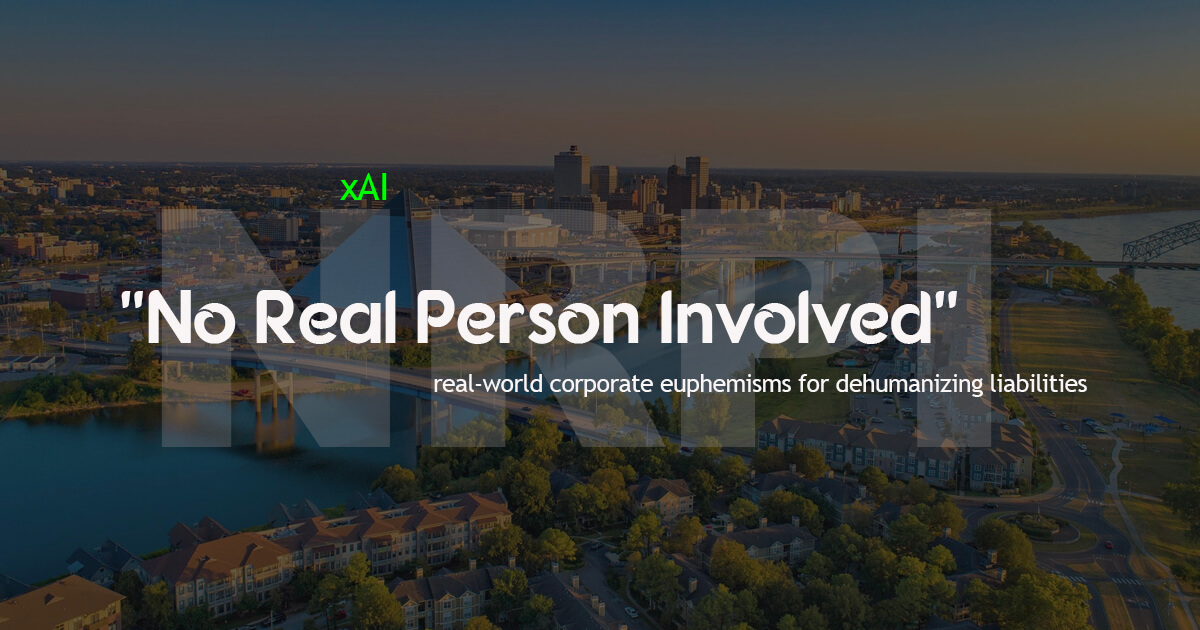
The phrase “No Real Person Involved” (NRPI) captures the frustration many Memphians feel: decisions made without community input, health risks imposed on neighborhoods that already suffer from pollution, and economic benefits that may not reach those most affected. The controversy highlights a fundamental question: Are profits and a handful of jobs worth risking the health and future of an entire community?
Conclusion: What’s the Real Cost—and Who Decides?
The facts show that xAI’s facility brings significant environmental and health risks to South Memphis, a community already struggling with pollution and health disparities. While the promise of jobs and investment is real, the number and quality of local jobs are likely overstated, and the economic benefits may not outweigh the costs to public health and trust.
The debate is not simply “left vs. right,” but about transparency, accountability, and who gets to decide the future of Memphis. Blocking xAI’s permit is not anti-business—it’s a demand for responsible, community-centered development that values both economic opportunity and the right to clean air and water.
Memphis deserves better than NRPI. Real people are involved, and their voices must be heard.
Key Takeaways:
- xAI’s data center is already one of the largest sources of air pollution in Memphis, operating many turbines without proper permits[1][3][6].
- Health risks include increased asthma, cancer, and other respiratory illnesses, especially in already overburdened neighborhoods[1][2][4].
- The promised economic benefits may not reach local residents, with most high-paying jobs likely going to remote or outside hires[4].
- The project advanced with little transparency or community input, fueling distrust and calls for environmental justice[2][4][6].
- The real question: Should Memphis sacrifice health and community trust for uncertain economic gains—or demand a seat at the table and a say in its own future?

This article is based on the latest reports and community statements as of April 2025. For those who want to make their voices heard, the Shelby County Health Department is accepting public comments on xAI’s permit through April 30.
Citations: [1] https://www.selc.org/press-release/new-images-reveal-elon-musks-xai-datacenter-has-nearly-doubled-its-number-of-polluting-unpermitted-gas-turbines/ [2] https://www.selc.org/news/elon-musks-xai-facility-is-polluting-south-memphis/ [3] https://www.cnbc.com/2025/04/10/elon-musks-xai-accused-polluting-air-in-memphis-selc-says-in-letter.html [4] https://www.momscleanairforce.org/xai-in-memphis/ [5] https://www.outlookbusiness.com/planet/industry/elon-musk-xai-pollution-memphis [6] https://www.npr.org/2024/09/11/nx-s1-5088134/elon-musk-ai-xai-supercomputer-memphis-pollution
Know someone who should read this?
Dive into our quick-start guides for Business, Enterprise, and Partner users—see how easy it is to grow faster, connect better, and dominate your market!